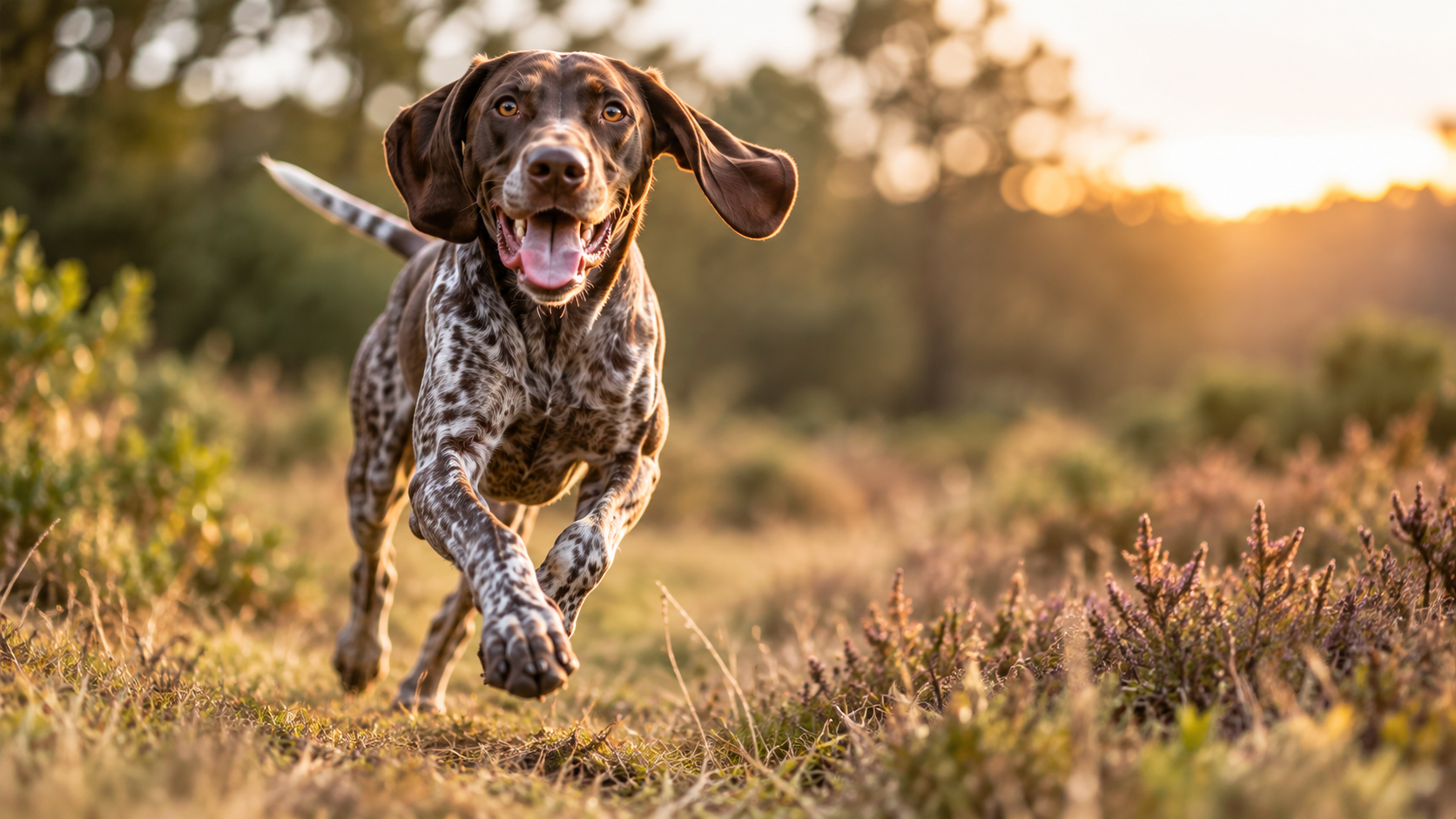
There's nothing quite like seeing your dog come flying back when you call! 🧡 But reliable recall doesn't happen by accident. It's built through repetition, reinforcement and developing a response that becomes almost automatic.
You call your dog.
Nothing.
You call again, a little louder this time.
Still nothing.
Meanwhile, your dog is having the absolute time of their life investigating a smell, chasing something interesting, or making friends with a dog approximately three fields away.
Sound familiar?
Recall is one of the most common frustrations I hear from dog owners. And it's particularly frustrating when your dog knows how to come back.
They do it perfectly in the garden. They come running when you open the treat cupboard. They might even have been brilliant at recall as a puppy.
So why does all of that apparently disappear the moment you step outside?
Well, there are a few reasons. And none of them involve your dog deliberately trying to wind you up.
Your Dog Isn't Ignoring You to Be Naughty
Let's get one thing out of the way.
Dogs don't ignore recall because they're being spiteful, stubborn or trying to prove a point.
They're responding based on what they've learnt, what's happening around them and what they find rewarding.
Imagine you're halfway through watching the most exciting film you've ever seen, and someone asks you to abandon it immediately to go and do the washing up.
Not particularly appealing, is it?
Now imagine you're a dog who's just discovered the most incredible scent trail.
Coming back to your owner might be something you're perfectly capable of doing, but that doesn't automatically mean it's the most appealing option at that moment.
Knowing how to do something and having a reliable, well-practised response are two very different things.
And that's an important distinction when it comes to recall.
But They Come Back Perfectly at Home!
This is probably one of the things I hear most often.
"They know what come means. They do it perfectly in the garden!"
And I believe you!
But here's the thing.
Dogs aren't always particularly good at generalising behaviours.
Just because your dog understands a cue in your kitchen or garden doesn't mean they automatically understand that the same expectation applies in a busy park surrounded by wildlife, people, other dogs and hundreds of interesting smells.
The environment has changed.
The distractions have changed.
And the value of everything happening around them has changed too.
This is why recall needs to be developed across different environments, rather than simply practised in one place and expected to work everywhere.
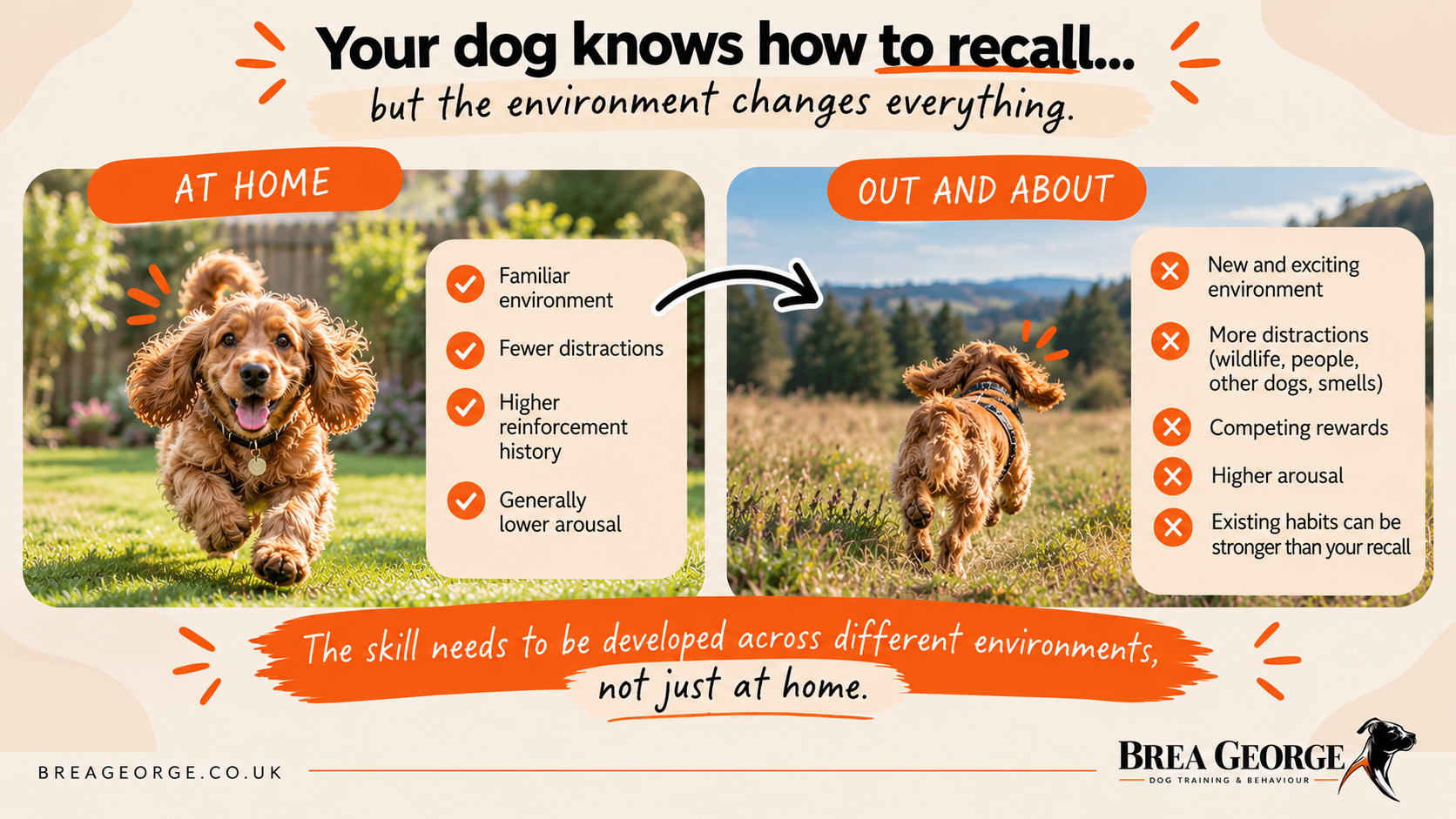
Just because your dog has a brilliant recall at home doesn't mean that skill will automatically transfer to the outside world. Different environments bring different distractions, and recall needs to be developed across them all.
Why Does Recall Suddenly Get Worse During Adolescence?
Ah, adolescence.
That wonderful stage where your previously delightful puppy seems to develop selective hearing overnight.
As dogs mature, their interests, motivations and responses to the world can change considerably.
They may become more independent, more interested in other dogs, more easily distracted or more motivated to explore.
And just like human teenagers, their ability to make good decisions isn't always particularly consistent.
That doesn't mean all your previous training has been wasted.
It means the dog in front of you is changing, and your training may need to change with them.
One of the biggest mistakes owners make during adolescence is assuming their dog is deliberately ignoring them because they previously had a reliable recall.
In reality, the skill may simply not be strong enough for the situations they're now encountering.
Practice Makes Permanent
This is something I talk about a lot in training.
Practice makes permanent.
Every time your dog hears their recall cue, ignores it and continues doing something incredibly rewarding, they're gaining more experience of that particular outcome.
Imagine calling your dog away from another dog.
They don't come.
You call again.
They continue playing.
Eventually, you walk over and collect them.
From your dog's perspective, ignoring the recall worked rather well. They got to carry on playing for longer!
And if that happens repeatedly, it can become a well-established pattern.
This is why management is such an important part of recall training.
Using a suitable longline in appropriate environments, choosing locations carefully and avoiding situations where your dog is likely to rehearse ignoring you can make a huge difference.
Management isn't admitting defeat. It's protecting the training you're trying to build.
And importantly, a longline isn't a tool for dragging your dog back when they don't respond. It's there to help keep them safe and prevent them from repeatedly practising behaviours we're trying to change.
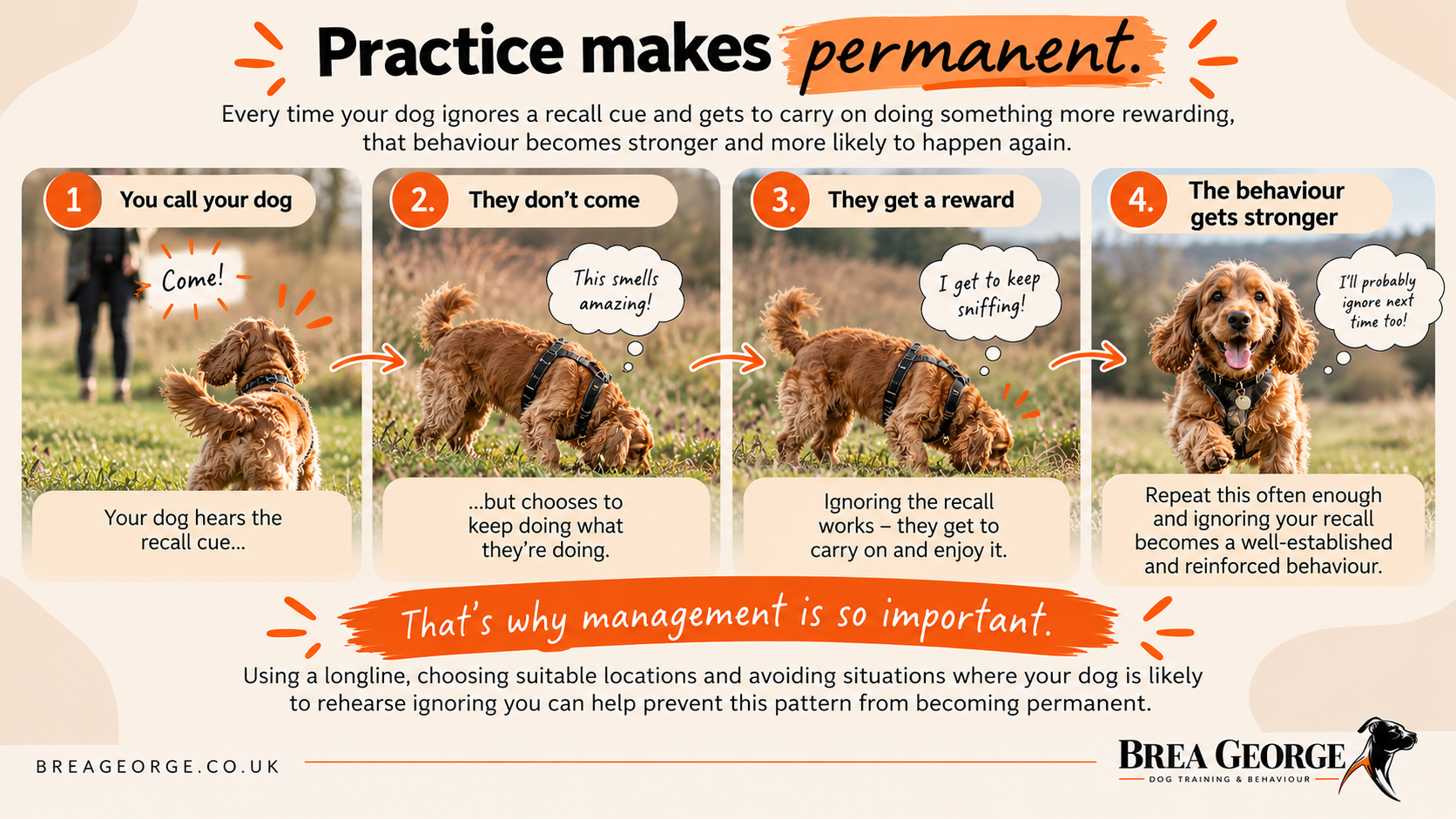
Practice makes permanent! Every time your dog ignores a recall and gets to carry on doing something rewarding, that behaviour can become stronger. Good management helps prevent those unwanted habits from becoming well established.
Have You Accidentally Made Coming Back Less Rewarding?
Here's something worth thinking about.
What usually happens when your dog comes back to you?
Do you clip their lead on and head home?
Do you stop them from playing?
Do you take them away from something interesting?
Now, there's absolutely nothing wrong with needing to do any of those things.
But if coming back consistently means the end of everything your dog was enjoying, you can probably see why recall might start to lose some of its appeal.
Sometimes we unintentionally teach dogs that returning to us predicts the fun stopping.
And that's not really the association we want!
Recall should have a strong, positive reinforcement history, rather than being something your dog only responds to when there's nothing better available.
Why Shouting Louder Doesn't Help
We've all seen it.
Someone standing in the middle of a field calling their dog's name repeatedly, getting progressively louder and more frustrated.
And I understand why. It's stressful when your dog doesn't come back, particularly if you're worried about their safety.
But repeating a recall cue over and over doesn't necessarily make it more meaningful.
In fact, it can teach your dog that the first few calls don't really matter.
And if your dog eventually returns to an understandably frustrated owner, the whole experience might not be particularly rewarding either.
The answer isn't to become louder or more demanding.
It's to look at why the recall isn't working in the first place.
I Don't Want My Dog to Have to Think About Coming Back
This is something I feel quite strongly about when teaching recall.
I don't want my dog to hear their recall cue, look at whatever they're doing, consider their options and then decide whether coming back to me is worthwhile.
I want their response to become almost automatic.
Think about how you react when your phone rings. You don't necessarily stop and consciously work through every step involved in answering it. You've repeated that behaviour so many times that reaching for your phone can feel automatic.
That's the sort of response I'm working towards with recall.
Through carefully structured training, repetition and reinforcement, we can strengthen the association between hearing the recall cue and immediately turning back towards us.
The more fluent and well-rehearsed that response becomes, the less deliberation it should require.
We're building a strong, reliable neural pathway, rather than relying solely on our dog making the decision we want every single time.
Of course, dogs aren't robots. Even a brilliantly trained recall can be affected by the environment, emotional arousal and competing motivations.
But there's a huge difference between a dog who knows what their recall cue means and a dog who has developed a deeply practised, almost automatic response to it.
And that difference is exactly what I'm aiming to build.
So, How Do You Actually Improve Your Dog's Recall?
This is where I think owners often get stuck.
They've tried taking better treats.
They've tried making themselves more exciting.
They've tried running away, changing their recall word, or only calling when their dog isn't distracted.
And some of those things can absolutely be useful.
But reliable recall isn't simply about finding the highest-value reward or becoming more interesting than everything else in the environment.
It's about building a strong association between the recall cue and the response we want, until that response becomes increasingly fluent and automatic.
And how we get there will depend on the individual dog.
For one dog, the biggest challenge might be wildlife.
For another, it's other dogs.
For another, it's simply that exploring the environment is incredibly rewarding.
Their learning history, confidence, emotional state and previous experiences all influence how we approach their training.
The training needs to reflect the dog in front of you.
Because there isn't one magic recall exercise that works for every dog.
Reliable Recall Is About More Than Getting Your Dog Back
Of course, we want our dogs to come back when we call them.
But good recall training is also about developing communication, engagement and a strong, well-rehearsed response that holds up in increasingly challenging situations.
And it's about understanding that reliability is something we build, not something we can simply demand.
A dog who comes back beautifully in a quiet field isn't necessarily ready to be recalled away from a group of playing dogs.
That doesn't make them badly trained.
It means there's more learning to do.
And that's okay.
If your dog's recall has gone backwards, don't panic. It doesn't mean you've failed or that your dog will never be able to enjoy freedom again.
It just means we need to look at what's happening and work out which pieces of the puzzle are missing.
Fed Up With Shouting Across the Field?
If your dog's recall seems to work everywhere except where you actually need it, I'd love to help.
Through my Everyday Coaching programme, we'll look at what's getting in the way of your dog's recall and build a training plan around their individual motivations, challenges and environment.
With weekly coaching and ongoing support, we can make adjustments as your dog progresses, rather than leaving you trying endless tips and hoping something eventually works.
Because recall isn't about finding a magic word.
It's about building a response so well practised that coming back becomes almost automatic.