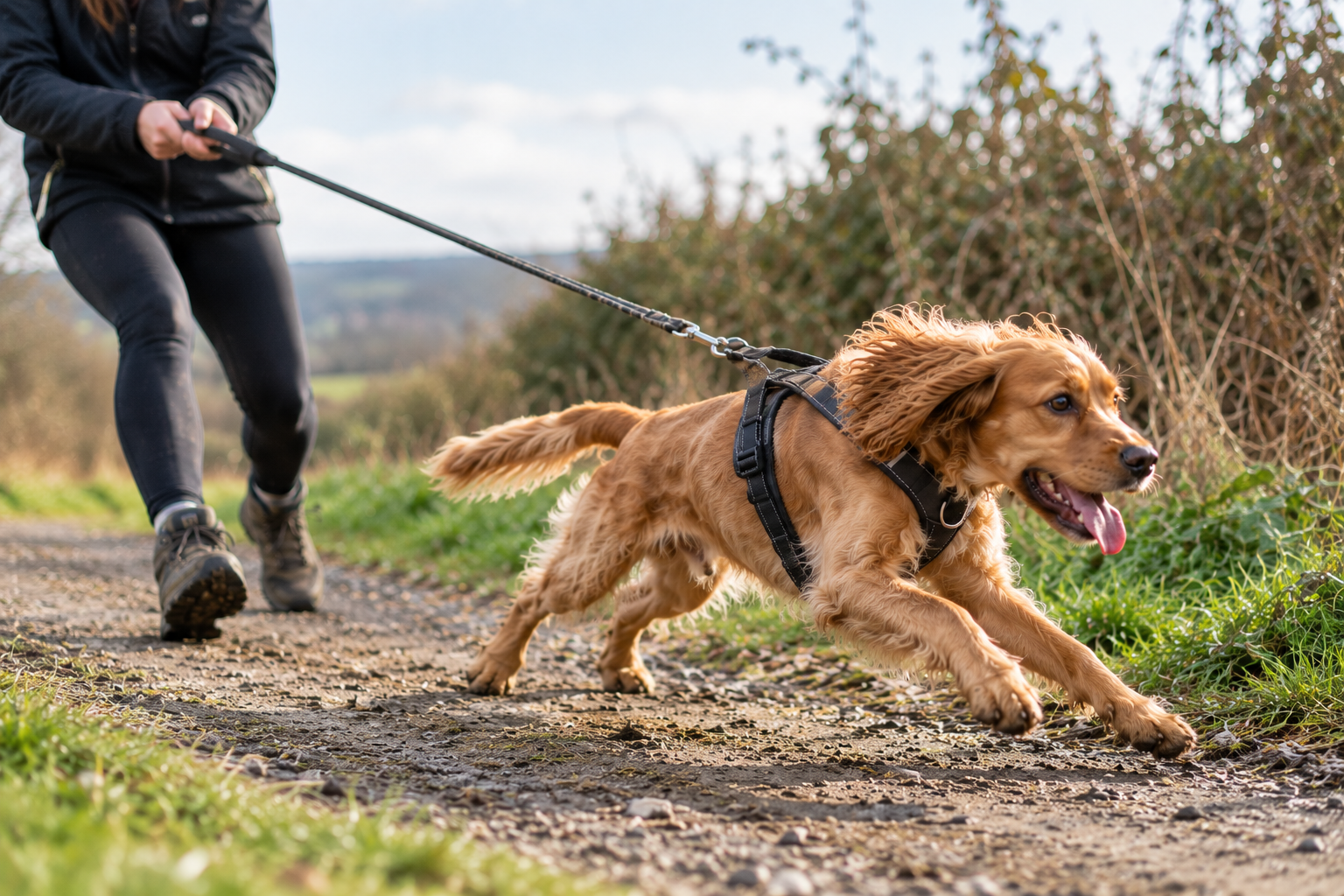
What should be an enjoyable walk can quickly turn into a tug-of-war! But pulling on the lead isn't about your dog being stubborn or disobedient. Understanding why they're pulling is the first step towards changing it.
You've barely made it out of the front door and your dog is already at the end of the lead.
Your arm hurts, you're frustrated, and what was supposed to be an enjoyable walk has turned into a tug-of-war.
You've probably tried stopping every time they pull. Maybe you've tried changing direction, using treats, or buying a different harness.
But somehow, you're still being dragged down the road.
Sound familiar?
The good news? Your dog isn't being stubborn, dominant or deliberately trying to make your life difficult.
They're just doing what works for them.
Why Does My Dog Pull on the Lead?
Because pulling often gets them exactly what they want.
There's an interesting smell ahead, another dog in the distance, or simply somewhere they'd rather be. They move towards it, the lead goes tight, and eventually they get there.
From your dog's perspective, pulling has been pretty successful!
But there's something else we often forget.
Dogs don't naturally walk at our pace. They want to stop, sniff, investigate, speed up and slow down. And they certainly don't arrive in our homes understanding what a lead is supposed to mean.
Loose-lead walking is a learnt skill, not something dogs automatically know how to do.
Forget Perfect Heelwork. I Want a Smile in the Lead.
One of my favourite ways to explain loose-lead walking is that I want to see a smile in the lead.
A lovely, relaxed curve between you and your dog.
That's it.
Your dog doesn't need to be glued to your left leg. They don't need to stare at you for the entire walk, and they certainly don't need to march along in perfect heel position.
They can walk ahead, stop to sniff, and explore the world around them.
As long as there's that lovely smile in the lead, we're heading in the right direction.
Because surely the whole point of taking our dogs for a walk is that we both enjoy it?
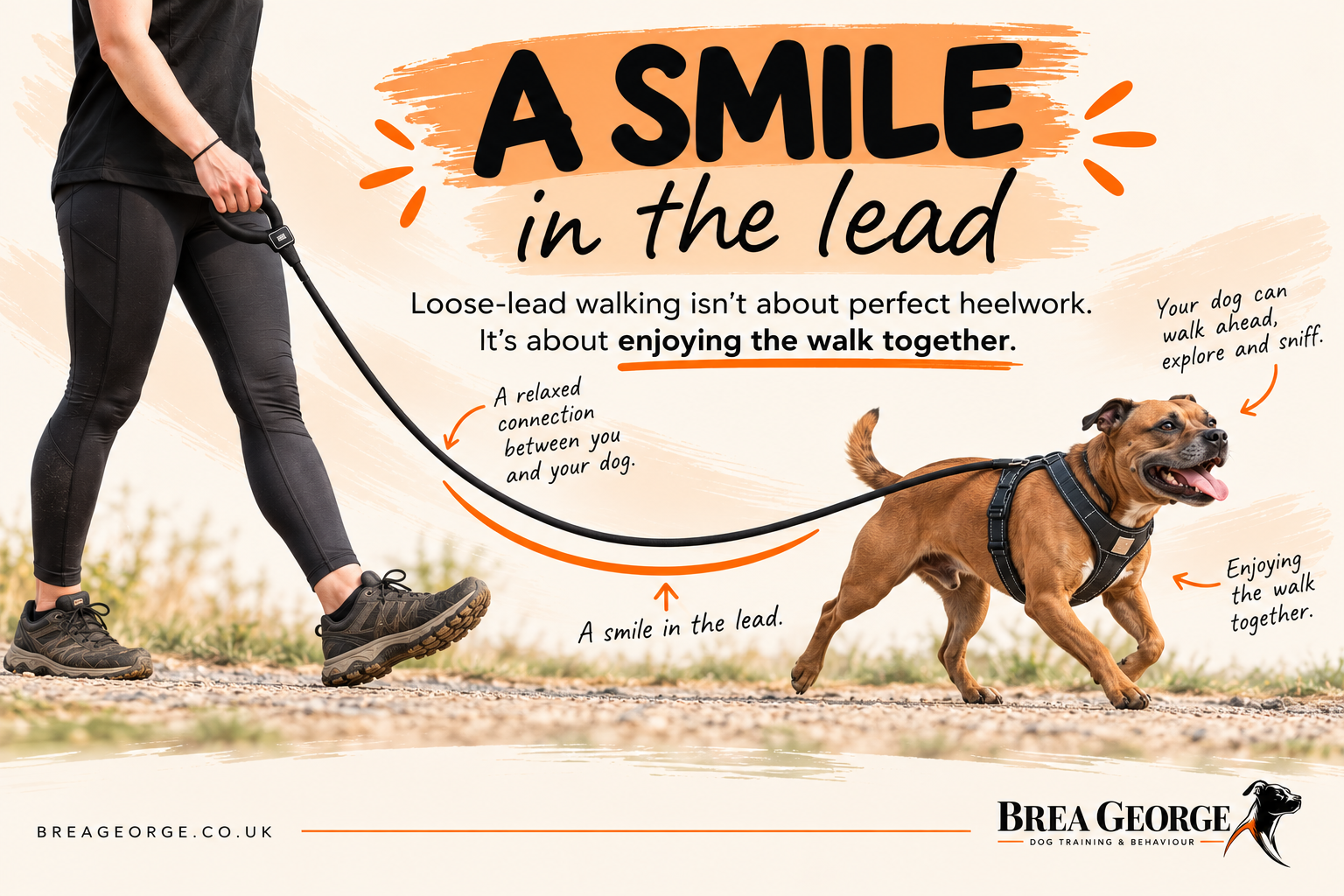
A smile in the lead! Loose-lead walking isn't about keeping your dog glued to your side. It's about giving them the freedom to explore while keeping that lovely relaxed connection between you.
Why Isn't the Usual Advice Working?
You've probably heard the classic advice:
Stop every time your dog pulls and don't move until the lead goes loose.
And whilst that can be part of a training approach, it doesn't necessarily address the bigger picture.
What happens if your dog is so excited about the environment that they can barely think about anything else?
What if they've spent the last three years successfully pulling everywhere?
Or what if they simply don't understand what you actually want them to do?
Stopping a behaviour and teaching an alternative aren't quite the same thing.
And this is where so many owners get stuck.
They're trying really hard to be consistent, but they're not necessarily teaching their dog the skills they need to succeed.
Not All Pulling Is the Same
This is probably one of the most important things I want owners to understand.
Two dogs can look almost identical at the end of a tight lead, but be pulling for completely different reasons.
One might be desperate to investigate an interesting smell.
Another might be frustrated because they can't reach another dog.
A third might be worried about something in the environment and trying to get away.
And another might simply be so excited about going for a walk that they're struggling to contain themselves.
Would I approach all four dogs in exactly the same way?
Absolutely not.
The reason behind the behaviour matters just as much as the behaviour itself.
And that's why generic training advice doesn't always get the results people are hoping for.
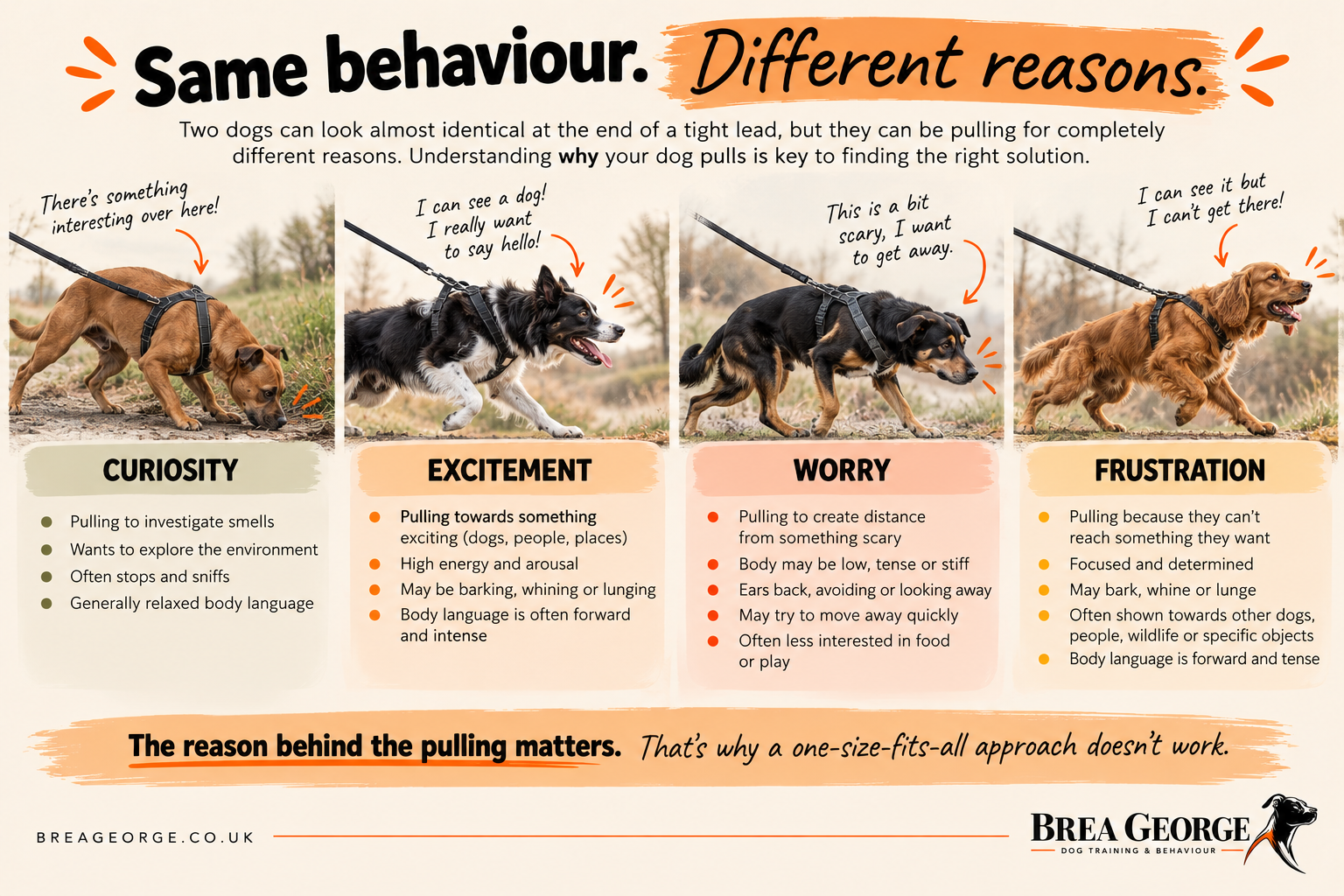
Two dogs can show exactly the same behaviour for completely different reasons. Understanding why your dog is pulling is the first step towards finding an approach that works for them.
So, How Do You Teach Loose-Lead Walking?
Here's the thing.
There isn't one magic exercise, piece of equipment or training trick that's going to work for every dog.
Successful loose-lead walking involves helping your dog understand what you're asking, making it worthwhile for them to work with you, and setting them up to succeed in environments where they're actually capable of learning.
It also involves looking at the individual dog.
Their motivation, their experiences, their excitement levels, and what they find rewarding.
For some dogs, we need to start by changing how they respond to tension on the lead.
For others, the bigger challenge is learning to engage with their owner when the world is full of exciting distractions.
And sometimes, the first thing we need to address isn't the lead walking at all.
That's why I don't believe in handing every owner the same set of exercises and expecting the same results.
Your Walks Don't Have to Feel Like a Battle
If you've been struggling with pulling, please don't assume you're doing everything wrong or that your dog is incapable of learning.
You might just be missing a piece of the puzzle.
And once we understand why your dog is pulling, we can start putting together a plan that actually makes sense for them.
Because the goal isn't a dog who walks like a robot.
It's a dog who can enjoy their walk, explore their environment, and still give you that lovely smile in the lead.
Ready to Enjoy Your Walks Again?
If you've tried all the usual advice and you're still struggling, that's exactly the sort of thing we can work through together.
Through my Everyday Coaching programme, we'll look at what's driving your dog's pulling and build a training plan that suits your dog, your walks and your everyday life.
You'll have ongoing support as you put things into practice, so when something isn't working, we can adjust it rather than leaving you wondering what to try next.
Because dog training isn't about finding a magic fix on Google.
It's about finding what works for the dog in front of you.