Choosing the dog that fits your real life — not just the one you fell in love with.
Choosing a dog breed is exciting. It’s also very easy to choose with your heart and work out the practicalities afterwards.
Maybe you’ve always wanted a particular breed. Maybe you’ve fallen in love with one you’ve seen on social media. Or maybe you’ve met one incredible dog and thought, that’s it — that’s the breed for me.
But choosing a dog isn’t really about asking:
“Which breed do I like?”
A much better question is:
“Which dog’s needs, traits and tendencies fit the life I actually live?”
Because you’re not just choosing what your dog looks like.
You’re choosing a dog whose ancestors may have spent generations herding livestock, retrieving game, chasing prey, guarding property, working independently from people or simply being a companion.
Those traits don’t disappear because we now want them to live in our homes.
Breed doesn’t tell us everything about an individual dog — far from it. Genetics, early experiences, learning, health and the environment all contribute to the dog in front of us.
But genetics matter.
And understanding what you might be signing up for before you bring your dog home can make life considerably easier for both of you.
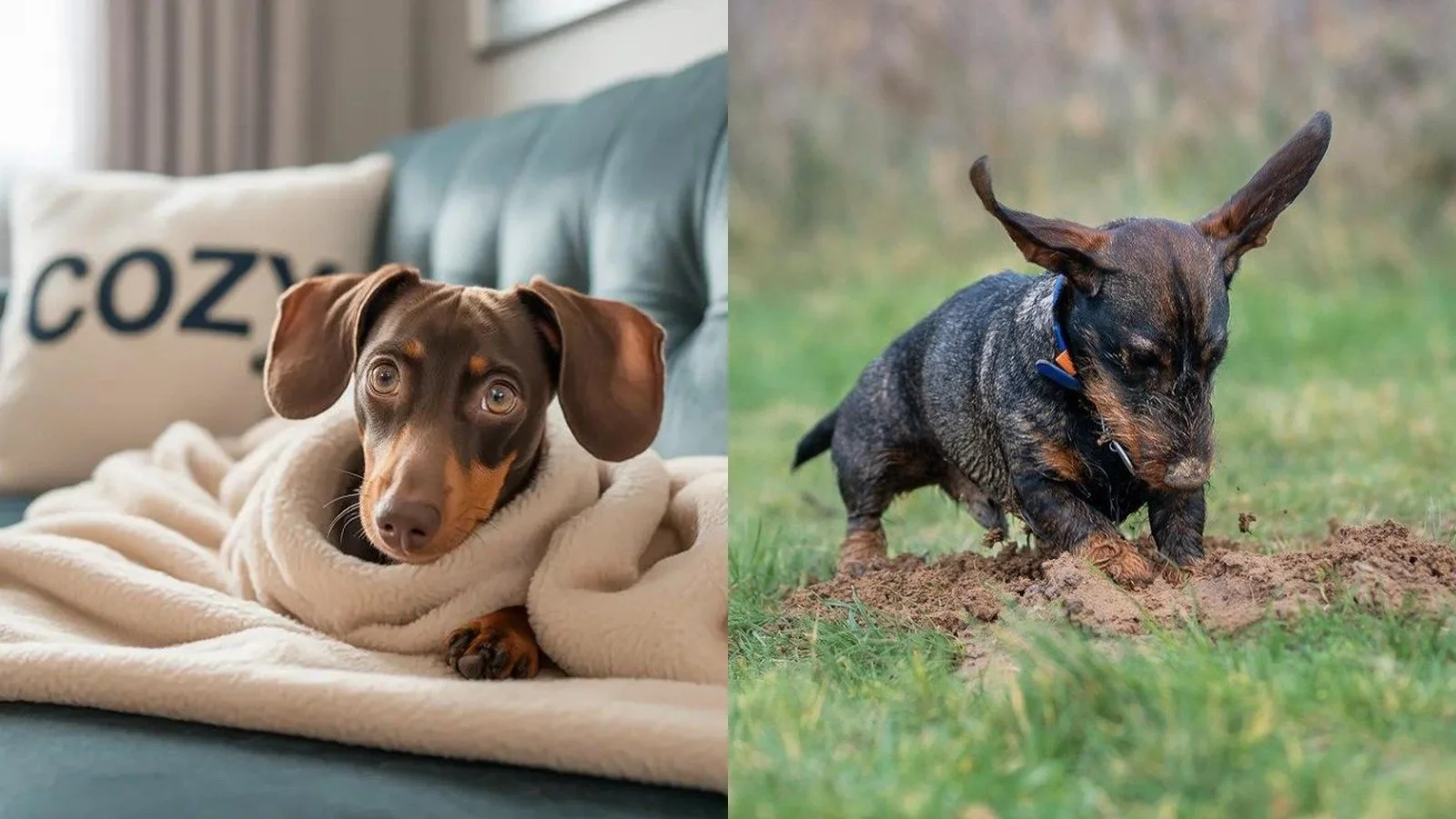
Cute little sausage dog? Absolutely. Bred to pursue badgers underground? Also yes.
Start with your life, not the breed.
Before scrolling through breed lists, start with something much less exciting:
Your Tuesday afternoon.
Not the version of your life where you’re going hiking every weekend, doing an hour of training every morning and taking up a new dog sport.
The life you actually live.
How long will your dog regularly be left alone? How much time do you genuinely want to spend training? Do you have children, cats or other dogs? How much grooming are you prepared to do? How much barking can you tolerate? What about mud, hair and drool?
And perhaps most importantly:
What behaviours would you find difficult to live with?
A behaviour that one person finds hilarious can drive somebody else absolutely mad.
Some people adore an intense dog who wants to be involved in everything they do. Others would find that exhausting.
Some love the independence of a dog who has their own ideas. Others want a dog who naturally checks in and wants to work with them.
Neither is better.
They’re just different dogs for different people.
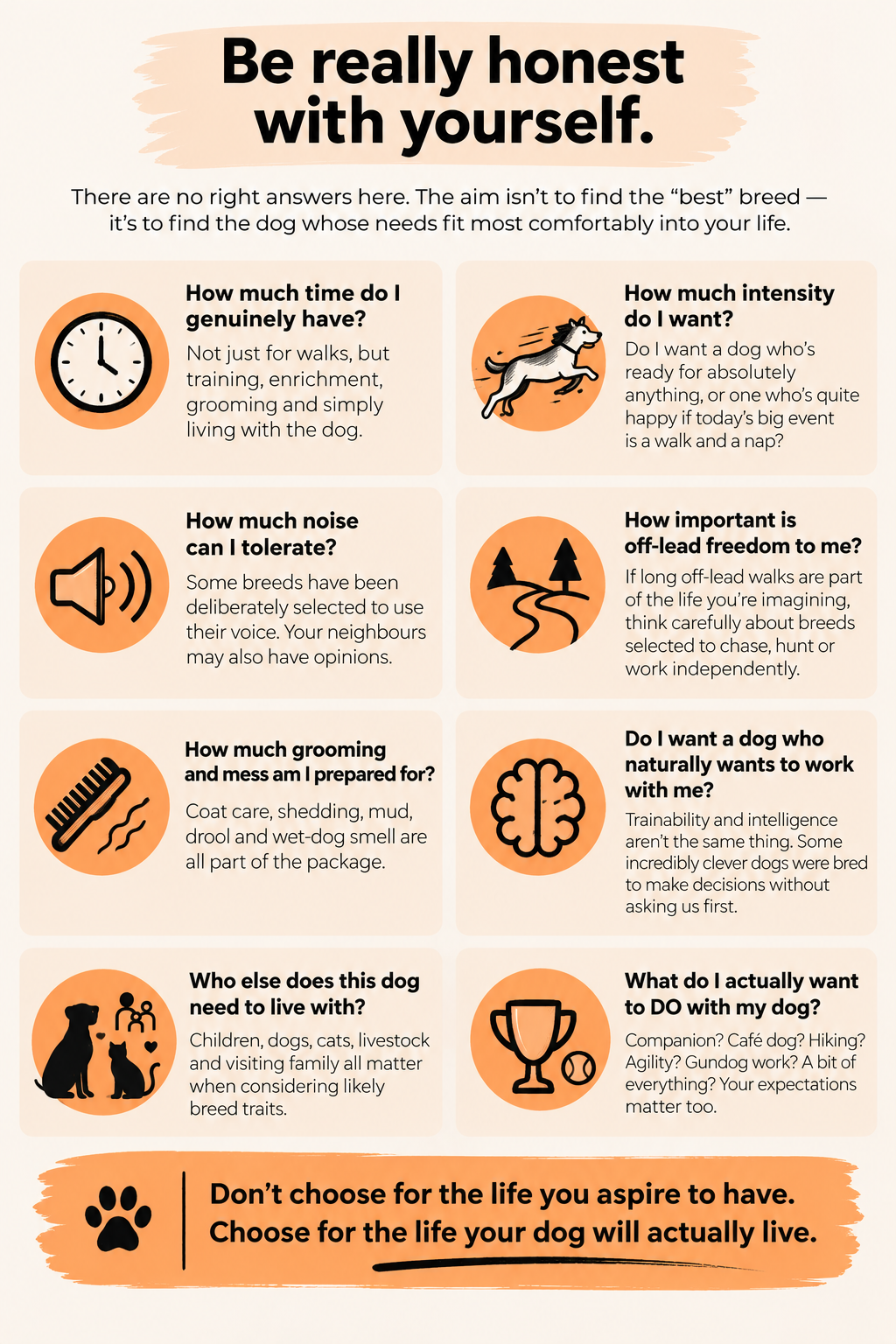
Infographic with eight questions to consider when choosing a dog breed, including time commitment, intensity, noise, off-lead expectations, grooming, trainability, household members and activities. Encourages choosing a dog whose needs fit the life you actually live.
What was this dog bred to do?
Dogs haven't always been bred simply to be our companions.
For generations, we've selectively bred them to perform particular jobs — to herd livestock, retrieve game, follow scent trails, chase prey, guard property, control vermin or work independently from people.
And when we selected dogs who were particularly good at those jobs, we weren't only selecting what they looked like.
We were selecting behaviour too.
A Border Collie who notices the tiniest movement. A Spaniel who wants to investigate every patch of cover. A Labrador who seems physically incapable of walking past something without picking it up. A Terrier who hears something underneath the shed and is now prepared to dedicate the rest of their life to finding it.
Those behaviours make sense when we look at what generations of dogs before them were asked to do.
Of course, breed doesn't give us a crystal ball. Two dogs of the same breed can be incredibly different, and breeding lines, early experiences, learning, health and environment all have an influence on the dog they become.
Breed gives us clues, not guarantees.
But understanding what a dog was originally bred to do can give us a much better idea of the behaviours we might be living with.
And sometimes, the very behaviour that makes someone say:
“How do I stop my dog doing this?”
...is closely related to something we've deliberately bred that type of dog to do incredibly well.
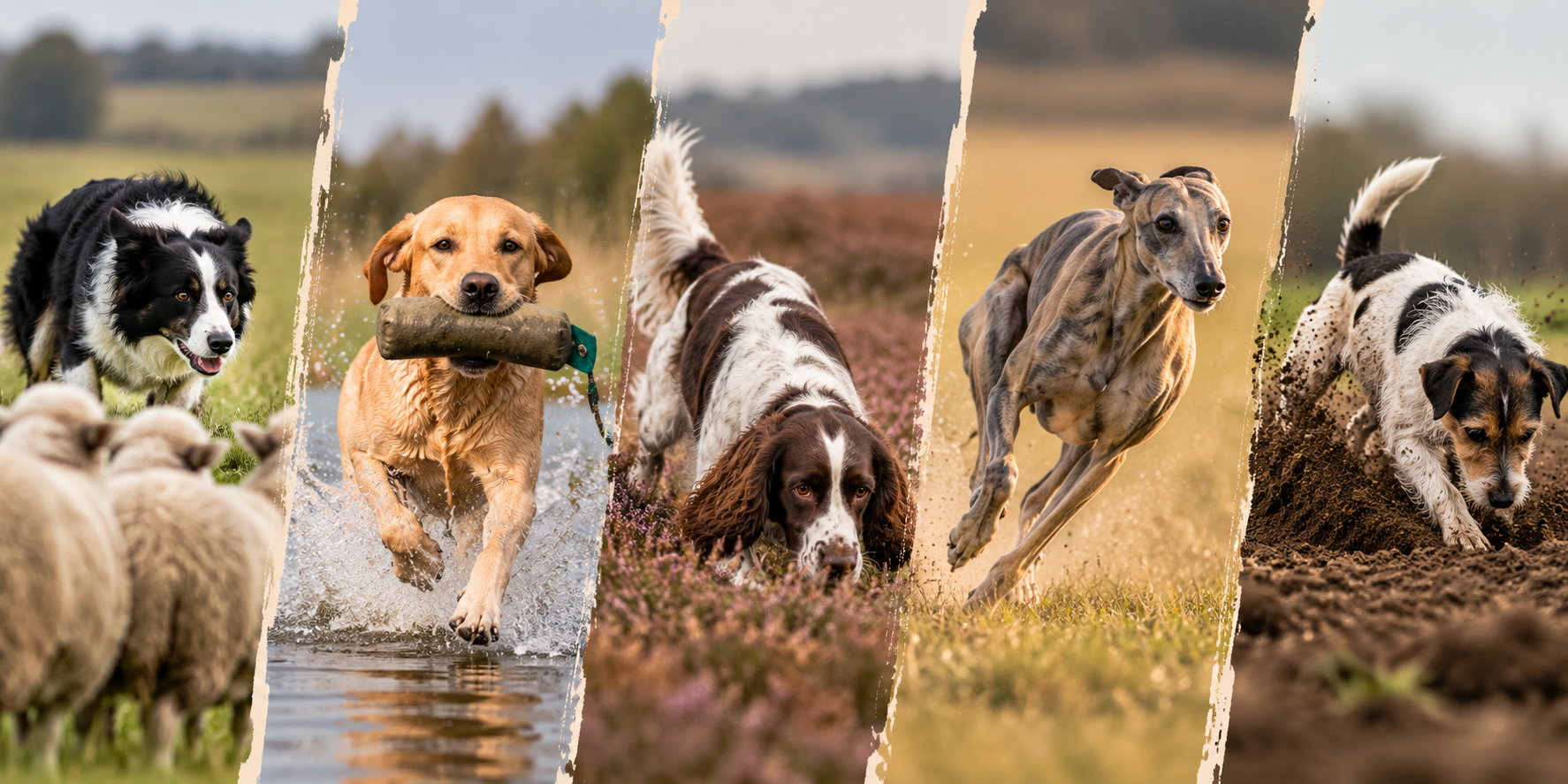
Different jobs. Different instincts. Different dogs.
The behaviours we see in our dogs today often make much more sense when we understand what generations before them were bred to do.
It’s not about good breeds and bad breeds.
None of these traits make a dog “good” or “bad”.
A dog who wants to chase isn't badly behaved because another breed finds it easier to ignore movement. A dog who follows their nose isn't stubborn because they don't naturally spend a walk checking in with their owner. And a dog who wants to control movement isn't necessarily being difficult when the children start running around the garden.
They're different dogs, with different tendencies.
The question isn't:
“Is this a good breed?”
It's:
“Are the things this type of dog is likely to find rewarding compatible with the life I want to share with them?”
Because plenty of traits can be absolutely brilliant in the right home.
That intense, movement-sensitive dog might be exactly what somebody wants for dog sports. The independent dog who doesn't need constant direction might suit somebody else beautifully. The busy Spaniel who wants to search every inch of a field might be an absolute joy for someone who loves training scentwork or gundog skills.
But put exactly the same dog into a home that expected a relaxed companion who potters along on Sunday walks and things can feel very different.
The aim isn't to find a dog with no challenging traits.
It's to choose the traits you're happy to live with.
So what might that actually look like?
Breed groups are broad, and there can be huge differences between breeds — and between individual dogs within the same breed.
But looking at the jobs dogs were originally selected to do can give us some useful clues about the kinds of behaviours we might see.
Think of these as tendencies, not promises.
Herding dogs
Think Border Collies, Australian Shepherds, Shelties and other breeds developed to work with and control livestock.
These dogs have often been selected to notice movement, respond quickly to changes in their environment and work closely with a handler. That can make them incredibly rewarding to train.
It can also mean they notice everything.
Bikes. Joggers. Cars. Children running. Other dogs moving. The neighbour shutting a car door three streets away... 👀
Some may want to chase or control movement, while others can be sensitive to noise, changes in their environment or busy situations.
You might love living with this type of dog if…
You genuinely enjoy training, want a dog who is responsive and engaged with you, and like the idea of giving their brain something to do.
You might find this difficult if…
You'd prefer a dog who happily switches off regardless of what's happening around them, or you don't particularly want dog training to become one of your hobbies.
Gundogs
Think Labradors, Golden Retrievers, Spaniels, Pointers, Setters and Poodles.
Even within the gundog group, dogs were bred for different parts of the job. Some were selected to retrieve. Some to hunt and flush game. Others to locate it and point.
So “gundog” can cover quite a range of behaviour.
You might see a love of carrying things, retrieving, water, scenting, searching and exploring the environment. Many have also been selected to work cooperatively with people — one reason some gundog breeds have become such popular family dogs.
But cooperative doesn't necessarily mean easy.
A Spaniel whose entire genetic history says SEARCH ALL THE THINGS may have rather different ideas about your relaxing woodland walk.
You might love living with this type of dog if…
You want an active, trainable dog and enjoy walking, exploring, retrieving, scentwork or training together.
You might find this difficult if…
You want your dog's attention to naturally stay on you when the environment is full of exciting smells, wildlife and things to investigate.
Terriers
Small but mighty!
Terriers were developed for various forms of vermin control and hunting, and traits such as persistence, courage, independence, chasing, grabbing and digging weren't unfortunate side effects.
They were the point.
That determination can make terriers hilarious, confident little characters and brilliant dogs to train when you understand what motivates them.
It can also mean that once they've decided there's something interesting underneath your shed, your opinion on the matter may be considered but ultimately rejected.
You might love living with this type of dog if…
You enjoy big personalities, don't mind a dog with opinions and can embrace finding appropriate outlets for chasing, digging, sniffing and problem-solving.
You might find this difficult if…
You want a dog whose first instinct is always to ask you before making a decision, or prey drive and independent behaviour would be particularly difficult in your lifestyle.
Sighthounds
Think Greyhounds, Whippets, Salukis and other dogs developed to spot and pursue moving prey.
That history can create an interesting combination.
Some sighthounds can be spectacularly committed to doing absolutely nothing at home... right up until something small and fast moves outside.
Then somebody presses the SPORT MODE button.
Their chase response can be powerful, and depending on the individual dog, that can affect where and when off-lead freedom is realistic.
You might love living with this type of dog if…
You like the idea of a dog who may be relatively chilled around the house but enjoys opportunities to run, and you're comfortable managing their environment where necessary.
You might find this difficult if…
Having a dog who can safely be off lead almost anywhere is very important to you, particularly around wildlife or small animals.
Scenthounds
Think Beagles, Basset Hounds, Bloodhounds and other dogs developed to follow scent.
When you've deliberately bred generations of dogs to put their nose down and keep following a trail, you shouldn't be terribly surprised when your modern pet thinks a fascinating smell is more important than your recall cue.
That's not stupidity.
And it's not necessarily stubbornness.
Their nose is doing exactly what we designed it to do.
You might love living with this type of dog if…
You enjoy watching a dog use their natural abilities, like scent-based activities and don't mind a little independence.
You might find this difficult if…
You want effortless off-lead walking, instant responses regardless of what's happening around you, or find a dog becoming absorbed in the environment frustrating.
Guardian and guarding breeds
Think German Shepherds, Rottweilers, Dobermanns, Cane Corsos, Akitas, and livestock guardian breeds such as the Great Pyrenees, Maremma Sheepdog and Anatolian Shepherd.
This is a particularly broad category because these breeds haven't all been developed for the same job. Some were bred to guard people or property, others to work alongside humans in protective roles, while livestock guardian breeds were selected to live alongside and independently protect livestock.
Depending on the breed, selection may have favoured traits such as vigilance, confidence, independence, territorial behaviour and an awareness of unfamiliar people, animals or changes in their environment.
A dog noticing someone approaching the house before you do can be exactly what humans once wanted.
In a busy modern neighbourhood with delivery drivers, visitors, dogs passing the window and children coming and going, that same tendency can require thoughtful management and training.
You might love living with this type of dog if…
You're comfortable with a dog who may be naturally more watchful or independent and you're prepared to understand the particular breed rather than expecting them to greet the entire world like a Labrador.
You might find this difficult if…
You want a naturally sociable dog who is likely to welcome unfamiliar people, dogs and situations without much thought.
Companion breeds
And then there are dogs whose more recent breeding history has focused much more heavily on companionship.
Think breeds such as Cavalier King Charles Spaniels, Bichon Frisés and Maltese.
Being bred primarily for companionship doesn't mean no needs, no training and no breed traits. They're still dogs.
But compared with a dog selectively bred to spend hours hunting, herding or guarding, their historical job may fit more naturally into the role many people actually want: Living alongside us.
You might love living with this type of dog if…
Companionship is genuinely your priority and you want a dog whose historical role is more closely aligned with sharing everyday life with people.
You might find this difficult if…
You want a highly driven working or sporting partner — and some companion breeds can be very people-focused, so independence and time alone still need consideration.
Remember: these are starting points, not personality descriptions.
Breed, breeding line, parents, early development, health, learning and life experiences all contribute to the individual dog you eventually share your sofa with.
But what about crossbreeds?
Crossing two breeds doesn't make their genetics disappear.
Take the Cockapoo.
They're often described as friendly, clever, affectionate family dogs — and plenty are. But underneath the name “Cockapoo”, you've still got genetics coming from Cocker Spaniels and Poodles.
And both of those breeds have a history.
Cocker Spaniels are gundogs. Depending on their breeding, you might see a strong desire to hunt, follow scent, work through cover, retrieve and generally stay rather busy.
And Poodles? Also gundogs.
Despite the perfectly coiffed coats we might picture today, Poodles were developed as water retrievers. They're intelligent, athletic dogs with their own working history.
Put the two together and you haven't created a dog that's somehow exempt from breed traits.
You've created a dog who may inherit any combination of them.
And that's important.
Crossbreeding doesn't allow us to neatly select the traits we like from each parent breed and leave the inconvenient ones behind.
One Cockapoo might be relatively relaxed and easy-going. Another might be incredibly busy, environmentally focused, sensitive, vocal or highly motivated to hunt and search. Another will be different again.
The same principle applies to Labradoodles, Cavapoos, Sprockers and all the other crosses we now commonly see.
The name might be new. The genetics aren't.
So if you're considering a crossbreed, don't only research:
“What are Cockapoos like?”
Research:
“What are Cocker Spaniels like?”
and
“What are Poodles like?”
Look at both breeds. Look at what they were developed to do. Look at the particular parents and breeding lines where you can. And ask yourself whether you'd be comfortable living with the traits from either side — rather than assuming you'll get a perfect 50/50 mixture of the bits you like.
Because genetics don't work like ordering from a menu.
And a crossbreed deserves exactly the same consideration of breed history, inherited tendencies and individual variation as any pedigree dog.
So, which breed should you choose?
There isn't one perfect breed.
And there probably isn't a breed where you'll love absolutely every trait that comes with it.
The aim isn't to find the dog with the fewest potential challenges. It's to find the dog whose needs, tendencies and quirks fit most comfortably into the life you actually want to share with them.
Start with your normal week.
Think about how much time you genuinely have, what you enjoy doing, what you don't want to spend your life managing and which behaviours you could happily live with.
Then look at the dog.
What were they bred to do? What behaviours might come naturally to them? What are they likely to find rewarding? And are those things compatible with the life you're offering?
Because the Labrador who carries everything, the Spaniel who wants to search every hedge, the Terrier determined to excavate your garden and the Collie who notices every tiny movement aren't doing dog ownership wrong.
They're being dogs.
And when we choose a dog with a better understanding of who they might grow up to be — rather than simply choosing the one we like the look of — we're giving both ends of the lead a much better chance of enjoying the life that follows.
One final question
Before you decide on a breed, ask yourself:
If this dog grows up to be a very typical example of what they were bred to be — rather than the exception — would I still want to live with them?
If the answer is yes, you might be getting somewhere. 🧡
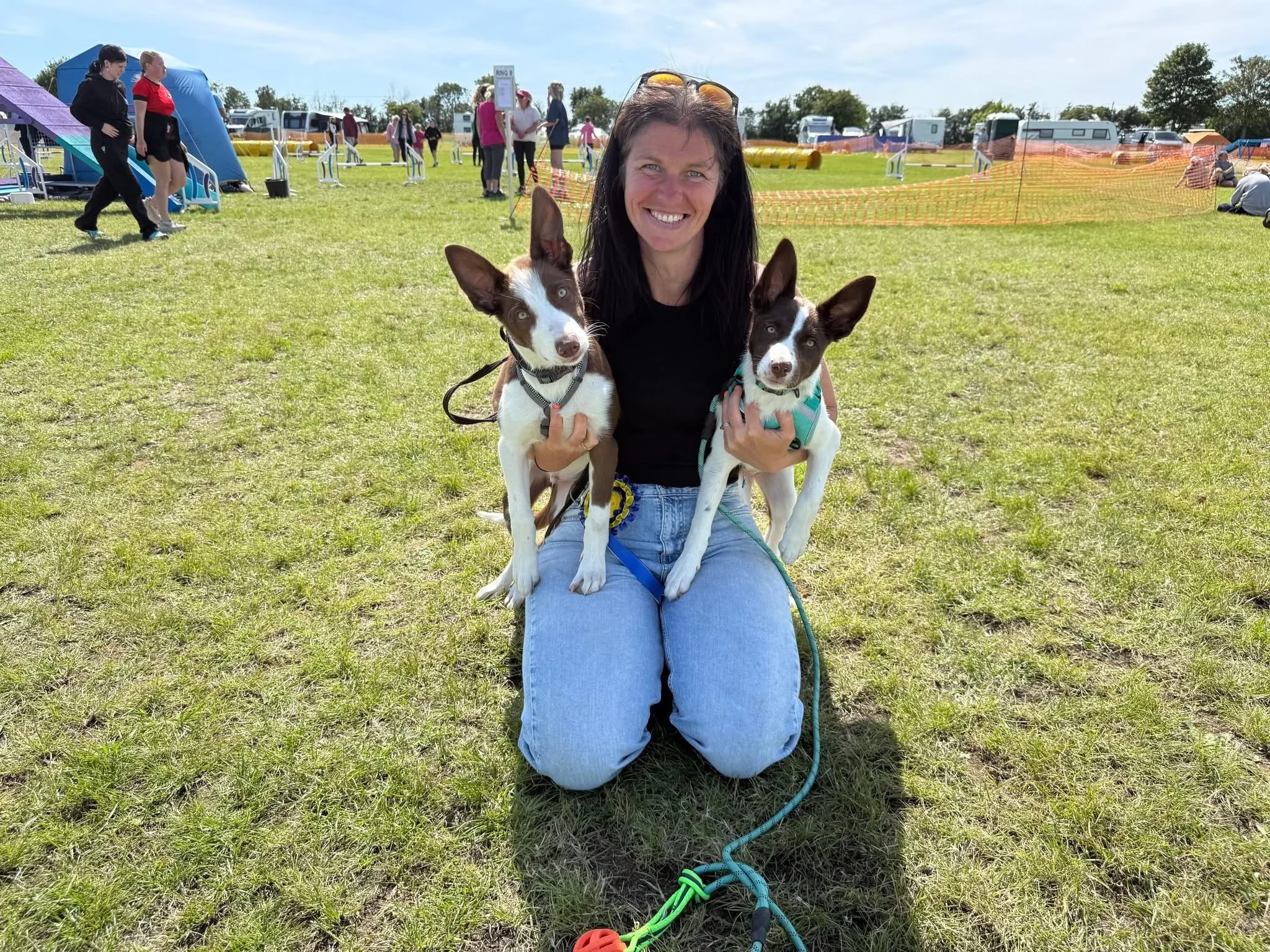
Want some help getting things right from the start?
Choosing the right dog is only the beginning. Once they're home, training should be built around the dog you've actually got — their personality, their genetics, your lifestyle and the things you want to be able to do together.
Everyday Coaching gives you ongoing support as you navigate puppyhood, adolescence and everyday training, with a plan that can change as your dog does. 🧡