When your lovely puppy suddenly appears to have forgotten absolutely everything you've ever taught them.
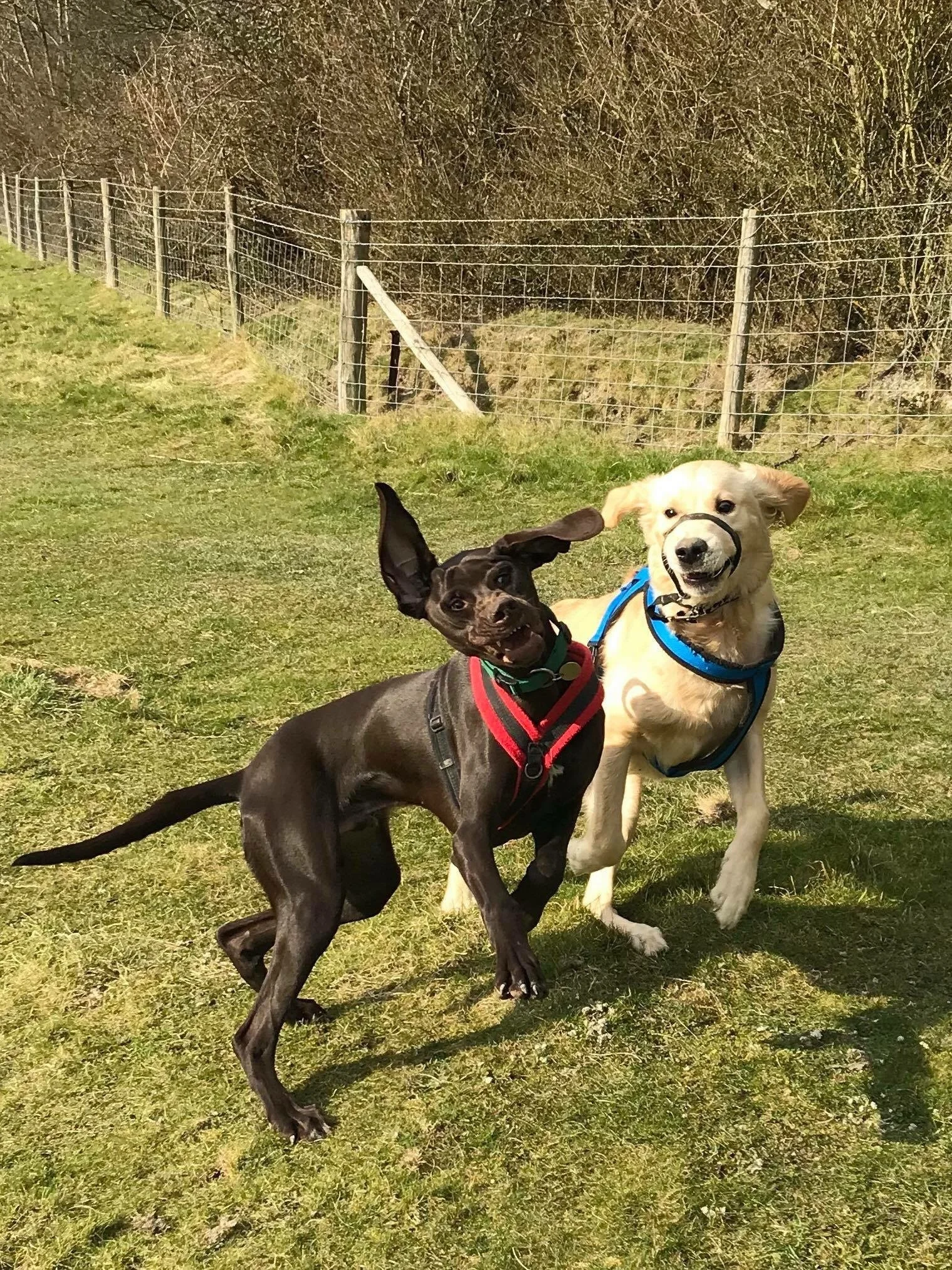
Adolescence: when your lovely puppy suddenly develops some very strong opinions about absolutely everything. 😂
There comes a beautiful point in puppy ownership where you start thinking:
We're actually getting quite good at this.
They come when they're called.
They listen.
They can settle.
Training is starting to make sense.
You congratulate yourself on surviving puppyhood.
And then one morning your puppy wakes up, looks you directly in the eye and apparently decides:
Absolutely not.
Welcome to adolescence.
The stage where your previously delightful puppy may suddenly develop some very strong opinions, discover that the rest of the world is considerably more interesting than you, become distracted by things they've never cared about before and seemingly forget behaviours they've known for months.
And before you decide you've completely ruined your dog...
There's actually quite a lot going on inside that teenage brain.
Adolescence isn't just bad behaviour
It's really tempting to describe adolescent dogs as stubborn, naughty or deliberately testing boundaries.
But adolescence is a genuine developmental stage.
Puberty commonly begins somewhere during the first year of a dog's life, although exactly when it happens varies considerably between individual dogs, sexes and breeds.
And puberty isn't the same thing as reaching behavioural or social maturity.
So your adolescent dog might look increasingly adult...
but that doesn't mean their brain and behaviour have finished developing.
Far from it.
The teenage brain 🧠
Adolescence involves significant development and reorganisation within the brain.
And one particularly useful way to think about it is that the systems involved in emotion, motivation and attention aren't necessarily developing neatly together.
Research looking at attention across dogs' lifespans has found differences in attentional performance during adolescence, with researchers suggesting that emotional and motivational distractions may interfere with attentional control during this stage.
Which might explain the familiar experience of:
“HE KNOWS THIS.”
He probably does.
But knowing something and being able to access that learning while his brain is screaming:
DOG! SMELL! PERSON! LEAF! SOMETHING MOVED OVER THERE!
are not quite the same thing.
And that's an important distinction.
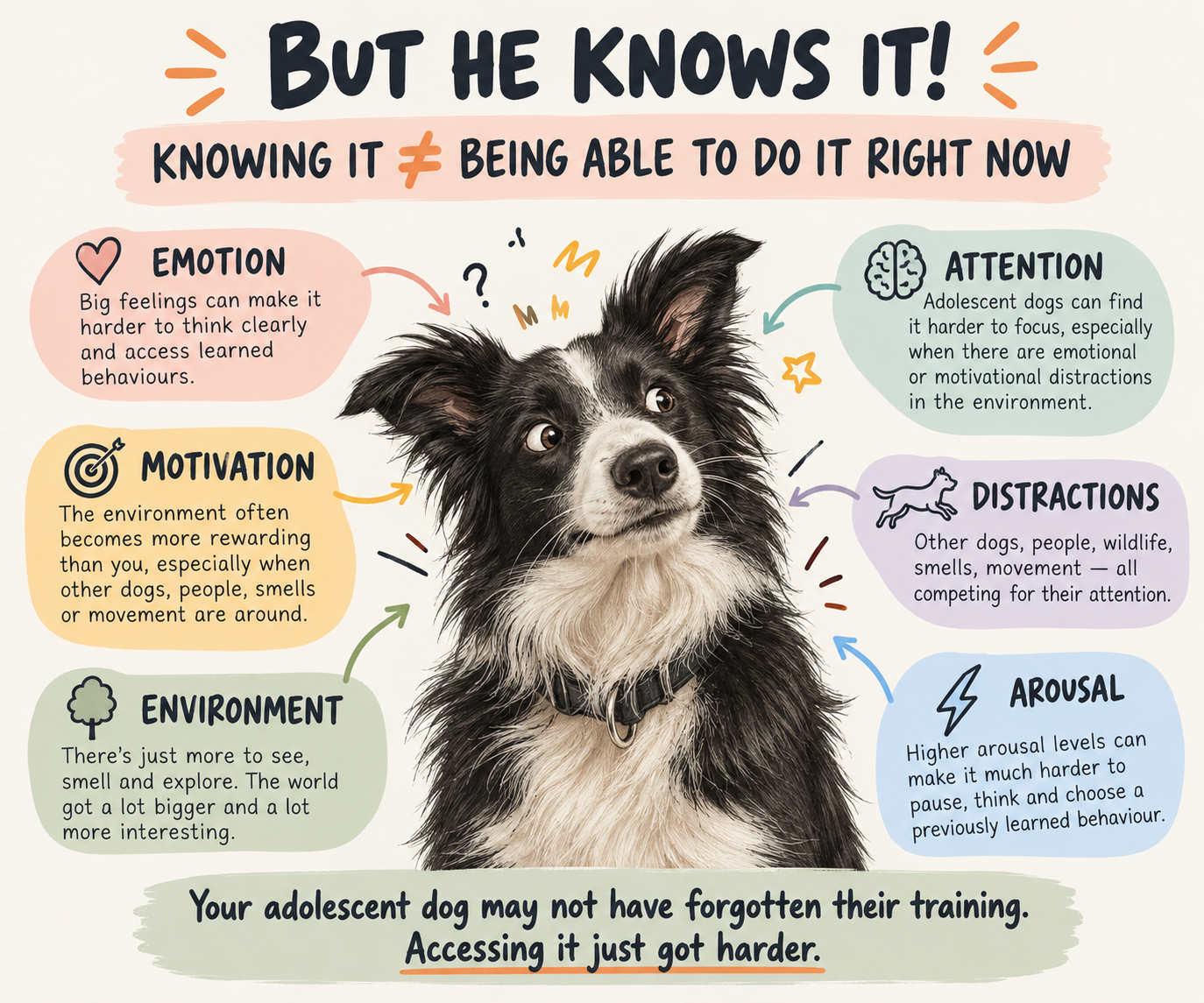
Knowing a behaviour and being able to access it in that moment aren't always the same thing — especially when an adolescent brain has a LOT going on. 😂🧠
They haven't forgotten everything
When a previously reliable behaviour starts falling apart, our immediate reaction is often:
But you know how to do this.
And technically, they might.
But behaviour doesn't exist in a vacuum.
Your adolescent dog may now be experiencing the environment differently.
Things may be more exciting.
Things may be more worrying.
Their motivation may have changed.
Their attention may be somewhere completely different.
So rather than thinking:
“My dog knows this and is choosing not to do it.”
I'd rather ask:
“What's making this harder for them today?”
That's a much more useful training question.
Suddenly, the world is VERY interesting
Remember that tiny puppy who followed you everywhere?
Yeah.
They've discovered other things exist.
As dogs develop, exploration, social behaviour, motivation and independence can change.
That doesn't mean your relationship has somehow disappeared.
It means your dog is developing.
This is often where owners notice their recall wobbling.
The environment has become more valuable, but we're sometimes still offering exactly the same deal we offered when our puppy naturally wanted to follow us everywhere.
So adolescence isn't the time to stop rewarding your recall because:
“They know it now.”
Quite the opposite.
Keep paying.
Practise around real distractions.
Let recall sometimes mean:
Come back → get something brilliant → go and explore again.
Don't turn every recall into the end of their fun.
And if that previously reliable recall really is starting to disappear?
That's when management becomes your friend again.
Practice makes permanent
There's a phrase I use a lot in training:
Practice makes permanent.
Not perfect. Permanent.
Every time your dog rehearses a behaviour, they're getting better at doing that behaviour — whether it's the behaviour you wanted or not.
So imagine your adolescent dog previously had a lovely recall.
Then suddenly the environment becomes more interesting and they ignore it.
You call again.
Nothing.
You try again tomorrow.
They carry on sniffing.
Then they spot another dog and discover that ignoring your recall means they can run over and have a brilliant time.
If that keeps happening, they're not simply demonstrating that their recall has temporarily got worse.
They're practising not recalling.
And they're potentially discovering that ignoring you can be incredibly rewarding.
This is where management becomes really valuable.
If your previously reliable recall has become questionable, putting your dog back on a long line isn't admitting defeat.
It isn't going backwards.
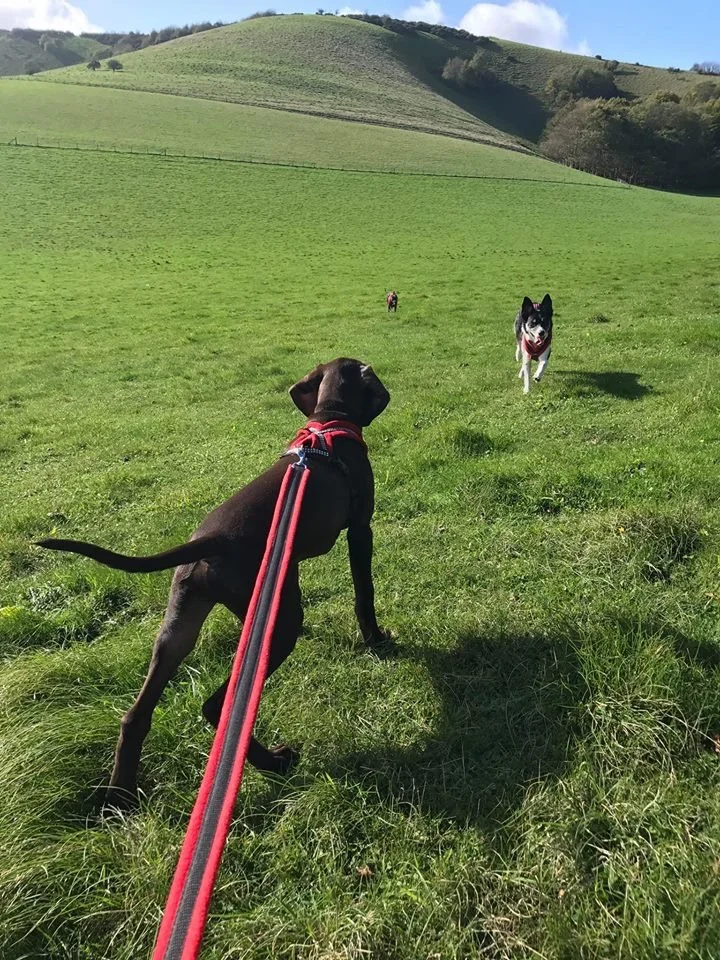
The long line isn't a step backwards. Sometimes management is exactly what lets your training keep moving forwards. 🧡
It's preventing them from repeatedly practising the behaviour you don't want while you strengthen the behaviour you do.
The same applies elsewhere.
If your dog has started charging out of the front door, manage the doorway while you retrain it.
If they've discovered they can launch themselves at visitors, don't give them twenty opportunities a week to rehearse it.
If they're struggling to disengage from other dogs, don't repeatedly put them in situations where practising fixation is inevitable.
Management gives you a chance to interrupt the rehearsal of unwanted behaviour while creating more opportunities to practise successful behaviour instead.
Brea's Tip 🧡
Going back to management isn't going backwards.
Sometimes putting the long line back on, increasing distance or making something easier is exactly what allows training to keep progressing.
I'd much rather prevent ten unsuccessful recalls and practise five brilliant ones than repeatedly “test” a recall just to find out whether it's still there.
You don't need to keep testing your training. You need to keep building it.
Confidence can change too
Adolescence isn't always just about excitement and independence.
Some dogs can also become more sensitive or show changes in their responses to people, dogs or the environment as they mature.
So if your adolescent dog suddenly seems unsure about something they previously didn't care about, don't assume they're being ridiculous.
And don't deliberately force them into it to prove there's nothing to worry about.
Give them information.
Give them space if they need it.
Let them observe.
Support them through it.
Development doesn't stop when the socialisation window closes.
Their experiences now still matter.
Brea's Tip 🧡
Don't use adolescence as an excuse to stop listening to your dog.
Yes, behaviour can change during adolescence.
But if your dog suddenly becomes reluctant to walk, doesn't want to be touched, starts reacting unusually, stops doing something they previously enjoyed or shows a significant behavioural change, don't automatically shrug and say:
Teenagers.
Behaviour is information.
Consider pain, health, fear, environment and everything else we'd normally consider too.
“Adolescent” shouldn't become another way of dismissing what a dog is communicating.
Your reinforcement might need an upgrade
The piece of kibble that could buy absolutely anything from your 12-week-old puppy may no longer have quite the same purchasing power.
Your adolescent dog's world has got bigger.
So periodically ask yourself:
Is what I'm offering actually competitive with what's happening around us?
That doesn't mean permanently walking around with roast chicken in your pockets.
It means understanding reinforcement.
Sometimes food will work.
Sometimes play will be better.
Sometimes access to the environment itself is the reward.
Sometimes being released to sniff is exactly what your dog wanted.
Training gets much easier when you stop thinking only about what you want your dog to do and start thinking about:
What does my dog want right now — and can I use that?
Don't respond by becoming stricter
This is probably one of the biggest traps of adolescence.
The puppy starts making questionable life choices.
We panic.
And suddenly everything becomes more controlled.
More commands.
More repetition.
More frustration.
More pressure.
Because clearly they need to learn who's boss.
They don't.
They need training appropriate for the dog standing in front of you today.
That might mean more management again.
You might reduce the difficulty of something temporarily.
You might reinforce behaviours you'd assumed were already “finished”.
You might realise that something which worked brilliantly three months ago needs adjusting for the dog you have now.
That's not going backwards.
That's responding to the stage your dog is currently in.
Keep giving them opportunities to succeed
Your adolescent dog still needs boundaries.
They still need consistency.
And sometimes they absolutely need you to prevent them making a spectacularly terrible decision.
But management isn't failure.
If recall is currently questionable, use the long line.
If they're struggling to settle somewhere incredibly exciting, change something about the situation.
If they're finding another dog overwhelming, create some distance.
If they're too aroused to learn, don't stand there repeating cues louder.
And importantly, don't continually put them into situations where they're almost guaranteed to get it wrong.
Give them opportunities to rehearse the behaviours you actually want.
Then build from there.
Reality check
Adolescence isn't one neat phase where your dog becomes an absolute nightmare at exactly six months old and returns to factory settings on their second birthday.
Development varies enormously.
Breed matters.
Individual dogs matter.
Environment matters.
Experiences matter.
And canine adolescence is still relatively under-researched compared with early puppy development, so we shouldn't pretend there's one precise timeline that applies to every dog.
Some dogs will sail through it relatively uneventfully.
Others will apparently wake up one morning and choose violence.
So don't panic because somebody else's 10-month-old Labrador seems wonderfully sensible while yours appears to have joined an organised crime syndicate.
They're different dogs.
This is why those foundations mattered
Remember all that stuff we've been building?
Engagement.
Reinforcement.
Communication.
Resilience.
Learning around distractions.
Being able to switch off.
A relationship where getting something wrong isn't frightening.
This is when you start cashing it in.
Your foundations don't mean adolescence won't happen.
They give you something to fall back on while it does.
And there will probably be days when you wonder what happened to the lovely puppy you had three months ago.
They're still in there.
They're just developing.
Keep training.
Keep reinforcing.
Keep listening.
Keep your sense of humour.
And maybe keep the long line handy.
Has your lovely puppy turned into a teenager?
If the training that was going brilliantly suddenly feels like it's fallen apart, you don't have to start again.
Everyday Coaching gives us the chance to adapt the training to the dog standing in front of you now — strengthening recall, rebuilding focus, managing the questionable decisions and helping you both survive adolescence with your relationship intact. 🧡